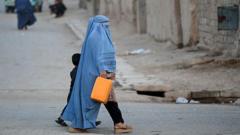
Afghan women tell the BBC their lives are unrecognisable after five years of Taliban rule
Women across the country speak of public floggings, losing their jobs, and barriers to healthcare that endanger lives.
1 article from BBC News.
Five years after seizing power in 2021, the Taliban has systematically restricted Afghan women's lives through bans on education beyond age 12, exclusion from most jobs, and restrictions on public movement and spaces. The UN describes Afghanistan as the world's worst country for women's rights, while poverty is pushing families to marry off daughters and healthcare is on the brink of failure. Women report experiencing public floggings and losing access to healthcare, and more than half of women's organisations could cease operations within the next year as international aid funding declines.
AI-generated summary of 1 source articles. Not original reporting — every claim links to its source below.
This angle centers on first-person accounts from Afghan women describing their day-to-day hardships, restrictions, and personal losses. The framing emphasizes individual voices and concrete impacts like job loss and healthcare barriers.
BBC News · The Guardian
This angle leads with international organisations' evaluations of the situation, focusing on statistical rankings, funding gaps, and institutional collapse. The frame treats Afghanistan as a humanitarian emergency requiring donor attention.
France 24 · Al Jazeera
This angle explicitly contrasts the Taliban's own framing of progress and security with documented evidence of repression and economic decline. The coverage treats the Taliban's claims as a misleading counterpoint to documented facts.
France 24
AI analysis of how 1 publishers framed this story, based on their headlines and summaries. A description of the coverage, not a judgement of any outlet.
Women across the country speak of public floggings, losing their jobs, and barriers to healthcare that endanger lives.